
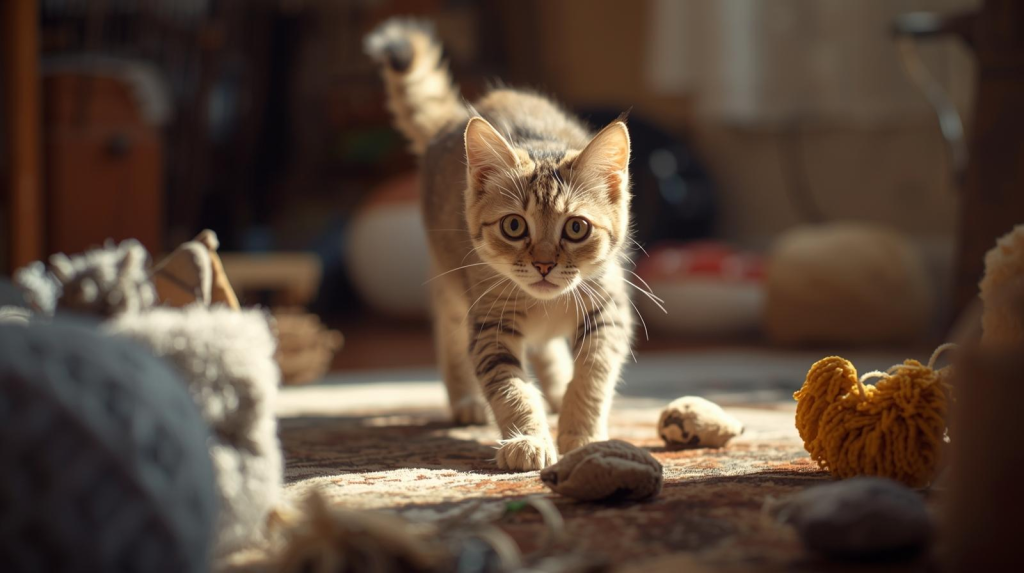

Many cat owners believe food, water, and a cozy bed are enough. However, cat play and exploration are essential for a truly fulfilling life. Cats are natural hunters, explorers, and problem-solvers. Without proper stimulation, they can become bored or stressed.
Indoor cats especially rely on their environment for stimulation. Therefore, creating opportunities for movement and curiosity keeps them healthy and happy. When you understand the importance of cat play and exploration, you can transform your home into an engaging space your cat loves.
Why Cats Need More Than Basic Care
Cats may appear independent, yet they have strong physical and mental needs. Cat play and exploration help satisfy their instincts, which are deeply rooted in hunting and territory exploration.
Without stimulation, cats often develop behavioral problems. For instance, they may scratch furniture, overeat, or become withdrawn. These signs indicate boredom rather than disobedience.
Moreover, cats that lack enrichment can gain weight. Limited movement leads to reduced calorie burn. As a result, obesity becomes a real concern for indoor cats.
Providing daily engagement improves both physical health and emotional balance. In turn, your cat becomes more relaxed and content.
The Natural Instincts Behind Play Behavior
Understanding your cat’s instincts makes enrichment easier. Cat play and exploration mimic the hunting cycle that cats naturally follow.
This cycle includes:
- Stalking prey
- Chasing movement
- Pouncing and catching
- Eating and resting
Interactive toys replicate this process. For example, feather wands simulate birds, while laser pointers mimic fast-moving prey. When your cat completes the cycle, they feel satisfied.
Additionally, exploration satisfies their curiosity. Cats love to investigate new smells, textures, and spaces. Therefore, combining movement with curiosity creates a complete experience.
Benefits of Daily Play Sessions
Regular activity offers many benefits. Cat play and exploration improve your cat’s quality of life in several ways.
Key benefits include:
- Improved physical fitness
- Better weight management
- Reduced anxiety and stress
- Stronger bond with owners
Furthermore, play sessions prevent destructive behavior. Cats that release energy through play are less likely to act out.
Short sessions throughout the day work best. Even 10 to 15 minutes can make a difference.
Creating an Enriching Indoor Environment
Indoor cats need stimulation built into their environment. Cat play and exploration should not rely only on scheduled sessions.
Instead, design your home to encourage activity:
- Place cat trees near windows
- Provide shelves for climbing
- Offer scratching posts in key areas
- Rotate toys regularly
Vertical space is especially important. Cats love to climb and observe from above. Therefore, adding height increases their sense of territory and security.
Changing the environment occasionally keeps things exciting. New objects or rearranged furniture can spark curiosity.
Interactive Toys That Keep Cats Engaged
Choosing the right toys makes enrichment easier. Cat play and exploration become more effective when toys match your cat’s instincts.
Popular options include:
- Feather wands for chasing
- Puzzle feeders for mental stimulation
- Ball toys that move unpredictably
- Tunnel toys for hiding and ambushing
Interactive toys are more effective than passive ones. They encourage movement and engagement with you.
However, variety is key. Cats can lose interest quickly if toys remain the same. Rotating toys keeps them exciting.
The Importance of Mental Stimulation
Physical activity alone is not enough. Cat play and exploration also involve mental challenges that keep your cat sharp.
Mental stimulation can include:
- Puzzle toys that release treats
- Training sessions with simple commands
- Scent-based games using hidden treats
These activities engage your cat’s brain. As a result, they feel more satisfied and less likely to become bored.
In addition, mental stimulation reduces stress. Cats feel more confident when they successfully solve problems.
How Exploration Builds Confidence
Exploration plays a major role in emotional health. Cat play and exploration encourage cats to interact with their surroundings.
When cats explore safely, they build confidence. For example, climbing a new structure or investigating a new object helps them feel in control.
Confident cats are less fearful and more adaptable. This is especially important in multi-pet households or changing environments.
Providing safe spaces for exploration allows your cat to grow emotionally.
Safe Outdoor Experiences for Cats
While indoor environments are important, outdoor experiences can add variety. Cat play and exploration can extend beyond the home in safe ways.
Options include:
- Supervised outdoor time
- Enclosed cat patios (catios)
- Leash training for short walks
These experiences expose your cat to new sights and smells. However, safety should always come first.
Ensure your cat is protected from traffic, predators, and harmful plants. Controlled exposure offers the benefits without the risks.
Signs Your Cat Needs More Stimulation
Cats often communicate through behavior. Cat play and exploration should increase if you notice certain signs.
Common indicators include:
- Excessive sleeping beyond normal levels
- Sudden aggression or irritability
- Overgrooming or hair loss
- Lack of interest in surroundings
These signs suggest boredom or stress. Increasing engagement can quickly improve behavior.
Observing your cat daily helps you adjust their routine effectively.
Common Mistakes Cat Owners Make
Many owners unintentionally limit their cat’s enrichment. Cat play and exploration require consistency and variety.
Common mistakes include:
- Relying only on food for comfort
- Using the same toys every day
- Skipping daily play sessions
- Ignoring vertical space
These habits reduce stimulation. Over time, they lead to boredom and behavioral issues.
Instead, focus on variety and interaction. Small changes can make a big impact.
How to Build a Daily Enrichment Routine
Consistency is key for success. Cat play and exploration should become part of your daily schedule.
A simple routine might include:
- Morning play session before feeding
- Midday independent toy time
- Evening interactive play
This structure mimics a natural hunting cycle. Cats feel more satisfied when their routine aligns with their instincts.
Additionally, predictable routines reduce anxiety. Your cat knows when to expect activity and rest.
Strengthening Your Bond Through Play
Play is not just about exercise. Cat play and exploration strengthen your relationship with your pet.
Interactive play builds trust. Your cat learns to associate you with positive experiences.
Furthermore, shared activities create communication. You begin to understand your cat’s preferences and behaviors.
Over time, this connection leads to a happier and more responsive pet.
Long-Term Benefits of Enrichment
Consistent enrichment leads to lasting improvements. Cat play and exploration support both physical and emotional health over time.
Enriched cats are:
- More active and fit
- Less prone to stress
- More curious and engaged
- Easier to manage behaviorally
In addition, enriched cats often live longer. A stimulating environment supports overall well-being.
Investing time in enrichment pays off in the long run.
Conclusion
Cat play and exploration are essential for a happy and healthy life. While food and shelter are important, they are not enough on their own. Cats need stimulation to stay active, curious, and emotionally balanced.
By combining physical activity with mental challenges, you create a fulfilling environment. Simple changes, such as interactive toys and climbing spaces, can transform your cat’s daily experience.
Start small and stay consistent. Over time, your cat will become more confident, engaged, and content. Ultimately, a stimulated cat is a joyful companion that thrives in your care.
FAQ
1. How often should I play with my cat each day?
Daily play sessions are ideal. Aim for at least two short sessions to keep your cat active and engaged.
2. What types of toys are best for indoor cats?
Interactive toys like feather wands, puzzle feeders, and moving balls are highly effective.
3. Can older cats benefit from enrichment activities?
Yes, older cats still need stimulation. Adjust activities to match their energy level and mobility.
4. Is it safe to let my cat explore outside?
It can be safe with supervision or enclosed spaces. Always prioritize your cat’s safety.
5. Why does my cat lose interest in toys quickly?
Cats get bored with repetition. Rotate toys regularly to keep them exciting and engaging.