
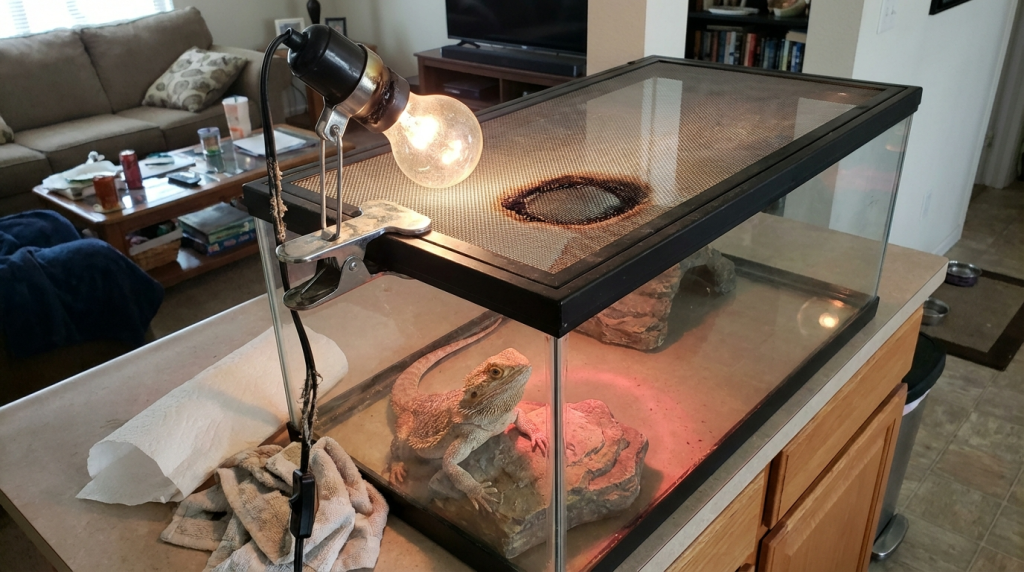

Heat lamp mistakes are one of the most common causes of injury and illness in captive reptiles. At first glance, a heat lamp seems simple. You install it, turn it on, and your reptile stays warm. However, reptiles depend entirely on external heat for survival. That means small errors can have big consequences.
Unlike mammals, reptiles cannot generate internal heat. Instead, they rely on basking spots and thermal gradients to regulate their body temperature. Therefore, when heat lamp mistakes occur, digestion, immunity, and behavior are affected immediately.
Some mistakes cause burns. Others cause chronic stress. In severe cases, organ damage may develop. Fortunately, most heating errors are preventable. Let’s explore what goes wrong and how to fix it before harm occurs.
Placing Heat Lamps Too Close to the Reptile
One of the most dangerous heat lamp mistakes involves positioning the lamp too close to the basking surface.
When bulbs sit only a few inches above a reptile, surface temperatures can spike quickly. Because reptiles may not move immediately, burns often occur silently.
Bearded dragons and other basking species are especially vulnerable. They instinctively seek warmth. However, if the temperature exceeds safe limits, skin damage may happen before the reptile retreats.
Always measure surface temperature using an infrared thermometer. Follow manufacturer recommendations for bulb distance. Adjust height as needed.
Proper spacing prevents unnecessary injury.
Using Heat Lamps Without a Thermostat
Another critical heat lamp mistake is operating heating devices without temperature control.
Heat output fluctuates with room temperature. During warm afternoons, basking spots may become dangerously hot. At night, they may cool too much.
A thermostat regulates heat automatically. It turns the lamp on and off to maintain a stable temperature.
Without one, overheating and underheating occur unpredictably.
Because reptiles rely on stability, thermostats are essential, not optional.
Failing to Create a Temperature Gradient
Reptiles need choice.
One common heat lamp mistake involves heating the entire enclosure evenly. Without a cooler side, reptiles cannot self-regulate.
A proper enclosure includes a warm basking area and a cooler retreat. This gradient mimics natural conditions.
When gradients are absent, reptiles may overheat or remain too cold.
Position heat lamps on one side only. Monitor both ends with thermometers.
Balance supports digestion and comfort.
Using the Wrong Wattage Bulb
Bulb wattage determines heat intensity.
Selecting a bulb too strong for the enclosure is a frequent heat lamp mistake. Smaller tanks heat up quickly under high-wattage lamps.
Conversely, weak bulbs fail to reach necessary basking temperatures.
Research your species’ requirements. Desert reptiles need higher basking temperatures than tropical species.
Match wattage to enclosure size and ventilation.
Appropriate wattage prevents temperature extremes.
Ignoring UVB and Heat Balance
Heat and UVB work together.
Another overlooked heat lamp mistake is misaligning UVB lighting with basking areas. Reptiles often absorb UVB while basking.
If UVB bulbs are positioned away from heat sources, reptiles may receive inadequate exposure.
Align UVB fixtures with basking spots to encourage proper calcium metabolism.
Additionally, replace UVB bulbs regularly. Output declines over time even if light appears bright.
Balanced lighting supports skeletal health.
Using Heat Rocks Instead of Overhead Lamps
Heat rocks are often marketed as convenient. However, they are associated with serious burns.
A common heat lamp mistake is substituting heat rocks for overhead heating. Heat rocks can malfunction and overheat.
Reptiles may remain in contact with overheated surfaces without recognizing danger.
Overhead heat sources provide more natural warming patterns.
If under-tank heating is used, ensure it is regulated by a thermostat.
Avoid unregulated direct-contact heat devices.
Not Monitoring Nighttime Temperatures
Nighttime conditions matter.
Some reptiles benefit from cooler nights. However, drastic drops may weaken immune function.
A frequent heat lamp mistake involves turning off all heat sources without monitoring nighttime levels.
Use ceramic heat emitters if nighttime warmth is required. These devices provide heat without light.
Monitor overnight temperatures carefully.
Consistency protects overall health.
Improper Mounting and Fire Risks
Safety extends beyond the reptile.
Heat lamp mistakes also include insecure mounting. Lamps placed directly on mesh lids may tip or overheat.
Use secure lamp stands or brackets. Ensure fixtures are rated for high heat.
Keep flammable materials away from bulbs.
Electrical safety protects both reptile and household.
Blocking Ventilation to Retain Heat
Some owners cover ventilation areas to keep enclosures warm.
While the intention is good, poor airflow creates humidity imbalance and respiratory risk.
Heat lamp mistakes often involve overcompensating for warmth by restricting airflow.
Instead, adjust wattage or enclosure insulation.
Proper ventilation maintains oxygen levels and prevents mold growth.
Overheating During Summer Months
Seasonal changes impact enclosure temperature.
In warm climates, room temperature may already be high. Adding a powerful heat lamp may push basking areas beyond safe levels.
One preventable heat lamp mistake is failing to adjust settings seasonally.
Recheck temperatures during seasonal transitions.
Small adjustments maintain safety year-round.
Not Replacing Bulbs When Needed
Heat bulbs degrade over time.
Although visible light may remain, heat output can weaken.
Another heat lamp mistake involves assuming bulbs last indefinitely.
Replace bulbs according to manufacturer guidelines.
Routine replacement prevents unexpected temperature drops.
Overlooking Signs of Heat Stress
Reptiles communicate discomfort subtly.
Open-mouth breathing, lethargy, and constant hiding may signal overheating.
Chronic underheating may cause appetite loss and slow digestion.
Heat lamp mistakes often go unnoticed until behavior changes appear.
Observe your reptile daily.
Early detection prevents long-term harm.
Conclusion: Precision Protects Reptile Health
Heat lamp mistakes can cause burns, stress, metabolic problems, and fire hazards. However, nearly all of these risks are preventable.
Use thermostats. Create gradients. Monitor surface temperatures. Choose proper wattage and secure mounting.
Heat is life for reptiles. Yet too much or too little becomes dangerous.
By setting up heating carefully and checking it regularly, you create a stable environment where your reptile can thrive.
Precision in heating leads to protection, comfort, and long-term health.
FAQs
- What is the most common heat lamp mistake?
Using a heat lamp without a thermostat is one of the most dangerous mistakes. - How far should a heat lamp be from the basking spot?
Distance depends on bulb wattage and species needs, but always measure surface temperature to ensure safety. - Are heat rocks safe for reptiles?
Heat rocks can malfunction and cause burns, so overhead heating is generally safer. - Do reptiles need heat at night?
Some species benefit from slight nighttime temperature drops, while others require gentle heat support. - How often should I check basking temperatures?
Temperatures should be checked daily during setup and weekly once stable to prevent heat lamp mistakes.