
Building a relationship with a parrot is nothing like bonding with other pets. These birds are intelligent, emotional, and deeply social. When you build bond parrot trust the right way, you don’t just gain a pet. You gain a companion with opinions, moods, and affection.
At the same time, parrots remember everything. Every interaction either strengthens or weakens your connection. That may sound intimidating. However, the good news is simple. Consistent care, respect, and communication go a long way.
Think of bonding like building a bridge. Each positive moment adds a plank. Rushed handling removes one. Over time, the bridge either becomes strong or shaky. The goal is to make it sturdy enough to last a lifetime.
Understanding How Parrots Form Bonds
Before you build bond parrot trust, it helps to understand how parrots think. In the wild, parrots live in flocks. Survival depends on cooperation, communication, and loyalty.
Because of this, parrots bond intensely. They don’t casually attach. Instead, they choose companions carefully. Once bonded, they expect consistency and emotional safety.
Parrots also read body language better than most animals. Tone of voice, posture, and facial expression all matter. Even silence sends a message. Therefore, awareness becomes your most valuable bonding tool.
Trust is not automatic. It is earned through repetition. When your parrot feels safe around you, bonding accelerates naturally.
Creating a Safe Environment That Encourages Trust
Safety forms the foundation of every successful relationship. To build bond parrot confidence, your home must feel predictable and calm.
Start with cage placement. Choose a spot where your parrot can observe daily life without being overwhelmed. Corners feel safer than open spaces. Avoid placing the cage near constant noise or sudden movement.
Routine matters as well. Feeding, cleaning, and social time should follow a loose schedule. Predictability reduces stress. When your bird knows what comes next, trust grows faster.
Lighting also plays a role. Natural daylight helps regulate mood. Darkness supports restful sleep. A rested parrot is far more receptive to bonding.
Most importantly, respect personal space. Never force interaction. Trust develops when your bird feels in control.
Daily Interaction Habits That Build Bond Parrot Trust
Consistency beats intensity every time. Short, positive interactions spread throughout the day work better than long, overwhelming sessions.
Begin by talking to your parrot often. Use a calm voice. Speak slowly. Over time, your bird will associate your presence with comfort.
Sit near the cage without demanding attention. Read, work, or relax quietly. This passive bonding tells your parrot you are safe company.
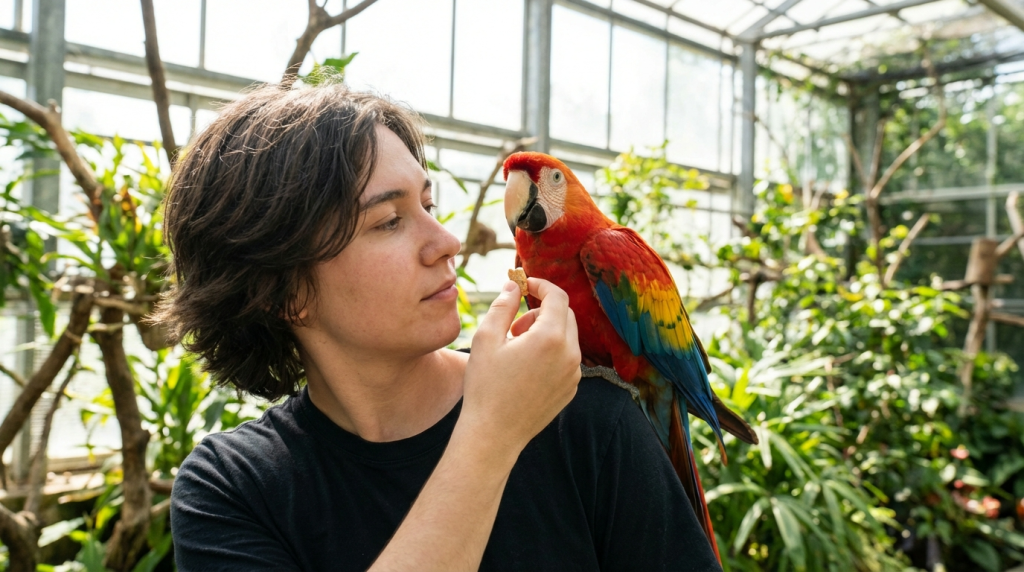
Offer treats by hand when possible. Food is a powerful trust builder. Choose healthy options and present them gently.
Eye contact should be soft. Staring can feel threatening. Blink slowly to show relaxation.
Every calm interaction becomes a brick in the bond you are building.
Learning Your Parrot’s Body Language
To build bond parrot understanding, you must learn to listen without words. Parrots communicate constantly through posture and movement.
Fluffed feathers often signal comfort. Tight feathers may indicate fear. Pinned eyes suggest excitement or overstimulation. A raised foot usually means relaxation.
Tail flaring, lunging, or hissing signal discomfort. When you see these signs, pause. Give space. Respecting boundaries strengthens trust.
Over time, patterns emerge. You’ll recognize moods before problems arise. This awareness prevents setbacks and deepens emotional connection.
A bonded parrot feels understood. That feeling changes everything.
The Role of Gentle Handling in Bonding
Physical contact should always be invited, never imposed. When you build bond parrot confidence through handling, patience matters more than technique.
Start with step-up training. Use a perch or your hand only when the bird is calm. Praise every success.
Keep sessions short. End on a positive note. Avoid grabbing, restraining, or chasing.
If fear appears, step back. Trust returns faster when mistakes are acknowledged.
Eventually, handling becomes enjoyable rather than tolerated. That shift marks real bonding progress.
Using Positive Reinforcement to Strengthen the Bond
Parrots thrive on encouragement. Positive reinforcement teaches your bird that being with you feels good.
Reward desired behaviors immediately. Use treats, praise, or gentle attention. Consistency helps your parrot connect actions with outcomes.
Avoid punishment entirely. Fear damages trust quickly. Instead, redirect unwanted behavior calmly.
Training sessions double as bonding time. Learning together creates shared experiences. Shared experiences build relationships.
When your parrot chooses to engage, celebrate it.
Talking, Singing, and Social Communication
Parrots bond through sound as much as action. Talking builds familiarity. Singing builds joy.
Use your parrot’s name often. Speak during daily tasks. Narrate your actions softly.
Many parrots enjoy music. Gentle singing or humming creates emotional resonance. Over time, your bird may join in.
Silence also matters. Sitting together quietly builds comfort. Not every moment needs activity.
Communication builds emotional safety. Emotional safety builds lasting bonds.
Respecting Independence While Building Connection
A strong bond does not mean constant interaction. Parrots need autonomy to feel secure.
Encourage independent play. Provide enrichment toys. Rotate them regularly.
Allow your parrot to explore safely outside the cage. Exploration builds confidence.
When your bird chooses to return to you, bonding deepens. Choice strengthens trust more than control ever could.
Balance closeness with freedom.
Handling Setbacks Without Breaking Trust
Every relationship faces challenges. Parrot bonding is no different.
Fear responses, hormonal changes, or environmental stress may cause regression. When setbacks occur, slow down.
Return to basics. Focus on calm presence. Reduce demands temporarily.
Avoid frustration. Parrots sense emotion easily. Calm energy restores balance.
Progress resumes when pressure disappears.
Building a Lifelong Emotional Connection
To build bond parrot companionship that lasts, think long-term. Parrots live for decades. Relationships evolve.
Continue learning. Adapt routines. Honor changing needs.
Celebrate milestones. First voluntary step-up. First cuddle.
Bonding is not a destination. It is a living process.
When trust is nurtured daily, the bond becomes unbreakable.
Conclusion
Learning how to build bond parrot trust is one of the most rewarding journeys a pet owner can take. Through patience, respect, and consistency, a deep emotional connection forms. Each calm interaction strengthens trust. Each choice to listen builds understanding. Over time, your parrot becomes more than a companion. It becomes family.
FAQ
1. How long does it take to build bond parrot trust?
Bonding timelines vary. Some parrots bond in weeks, while others take months. Consistency speeds progress.
2. Can older parrots still form strong bonds?
Yes. Age does not prevent bonding. Patience and respect remain the key factors.
3. What mistakes slow down parrot bonding?
Forcing interaction, ignoring body language, and inconsistent routines often damage trust.
4. Do all parrot species bond the same way?
Bonding styles differ slightly by species. However, trust, safety, and respect matter universally.
5. How do I know my parrot trusts me?
Relaxed posture, voluntary interaction, vocal engagement, and calm behavior signal trust.