
If your dog struggles with vomiting, loose stools, gas, or unpredictable digestive flare-ups, you’re not alone. Many dogs develop stomach sensitivities at some point in their lives. Some are born with gentle digestive systems, while others develop issues from stress, allergies, illness, age, or dietary mistakes. No matter the cause, choosing the best foods for sensitive stomach dogs can transform your dog’s comfort and health more than almost anything else you do.
Digestive problems don’t simply affect the stomach. They influence mood, appetite, energy levels, coat condition, and the immune system. Because the gut plays such a central role in overall health, feeding a diet tailored to sensitive digestion becomes one of the most powerful steps you can take. When you provide the right foods, your dog feels calmer, digests more efficiently, and enjoys each meal without discomfort.
In this in-depth guide, you’ll explore how to choose the best foods for sensitive stomach dogs, what ingredients help or harm digestion, and how to switch diets safely. You’ll also learn how to spot digestive triggers early and support your dog’s gut with simple, effective habits.
Why Some Dogs Need Foods for Sensitive Stomachs
Digestive sensitivity stems from many possible sources. While some dogs grow out of their issues, others require long-term dietary support. Understanding the root causes helps you choose the best foods for sensitive stomach dogs and prevents unnecessary trial and error.
Dogs may develop sensitive digestion due to:
- Food intolerances or allergies
- Sudden diet changes
- Low-quality ingredients
- Stress or anxiety
- Parasites or past infections
- Antibiotic disruption of gut bacteria
- Aging and slower digestion
- Breed tendencies
Certain breeds—including French Bulldogs, Boxers, Yorkies, German Shepherds, and Poodles—are more prone to digestive trouble. Regardless of breed, nearly all dogs benefit from gentler formulas when upset stomachs appear frequently. Because symptoms often look mild at first, choosing the right food early prevents more serious problems later.
Signs Your Dog Needs Sensitive Stomach Foods
Before selecting the best foods for sensitive stomach dogs, it helps to recognize the signals your dog is sending. Digestive issues rarely appear overnight. Instead, they develop through subtle shifts that become consistent over time.
Common symptoms include:
- Gas or bloating
- Loose stools or diarrhea
- Vomiting after meals
- Reduced appetite
- Grass-eating
- Rumbling stomach
- Scooting
- Bad breath
- Weight loss
Although these signs may appear in healthy dogs occasionally, frequent episodes suggest the need for a gentler, more tailored diet. When you match food to your dog’s needs, these symptoms typically fade quickly.
What Makes the Best Foods for Sensitive Stomach Dogs?
The best foods for sensitive stomach dogs share key characteristics that support digestion, soothe the gut, and prevent irritation. While formulas vary, most effective diets include gentle proteins, easy-to-digest carbohydrates, and supportive nutrients.
High-Quality Animal Protein
Protein should come from clean, recognizable sources such as:
- Chicken
- Turkey
- Salmon
- Lamb
- Duck
Dogs with severe sensitivities often do better on novel proteins like venison, rabbit, or whitefish. New proteins reduce the chance of triggering immune reactions, making them ideal for stomach issues linked to allergies.
Limited Ingredient Formulas
Many of the best foods for sensitive stomach dogs use short ingredient lists. Fewer ingredients make it easier to pinpoint triggers and reduce the risk of inflammation.
These diets often avoid:
- Artificial preservatives
- Artificial colors
- Corn, soy, and wheat
- Excess fillers
Since every ingredient matters, a simple formula supports smoother digestion.
Easily Digestible Carbohydrates
Dogs with sensitive stomachs digest some carbohydrates more easily than others. Look for formulas containing:
- Rice
- Oatmeal
- Potatoes
- Sweet potatoes
- Barley
These options provide energy without stressing the digestive system.
Healthy Fats for Gut and Skin Support
Fats fuel your dog’s body, but poor-quality fats cause stomach upset. The best foods for sensitive stomach dogs contain:
- Salmon oil
- Flaxseed
- Chicken fat
These fats support nutrient absorption, coat health, and stable digestion.
Prebiotics and Probiotics
Gut bacteria strongly influence digestion. Many sensitive stomach formulas include:
- Prebiotics to feed healthy bacteria
- Probiotics to increase beneficial microbes
These additions help balance the microbiome and strengthen the gut barrier.
Fiber for Firm Stools
Moderate fiber helps regulate bowel movements and prevent diarrhea. Ingredients like pumpkin, beet pulp, and flaxseed gently support consistency without causing irritation.
Types of Foods for Sensitive Stomach Dogs
Different dogs respond better to different formats. Exploring the options helps you find the best fit for your dog’s digestive style.
Dry Kibble
Dry kibble designed for sensitive digestion remains one of the most popular choices. It stays fresh longer, supports dental health, and includes added nutrients. However, choose formulas with minimal processing and high-quality fat sources.
Wet Food
Wet food is often easier to digest because it requires less breaking down. Dogs with dental issues or low appetite also benefit from its aroma and moisture. When choosing wet formulas, prioritize limited ingredients and clean proteins.
Fresh-Cooked Food
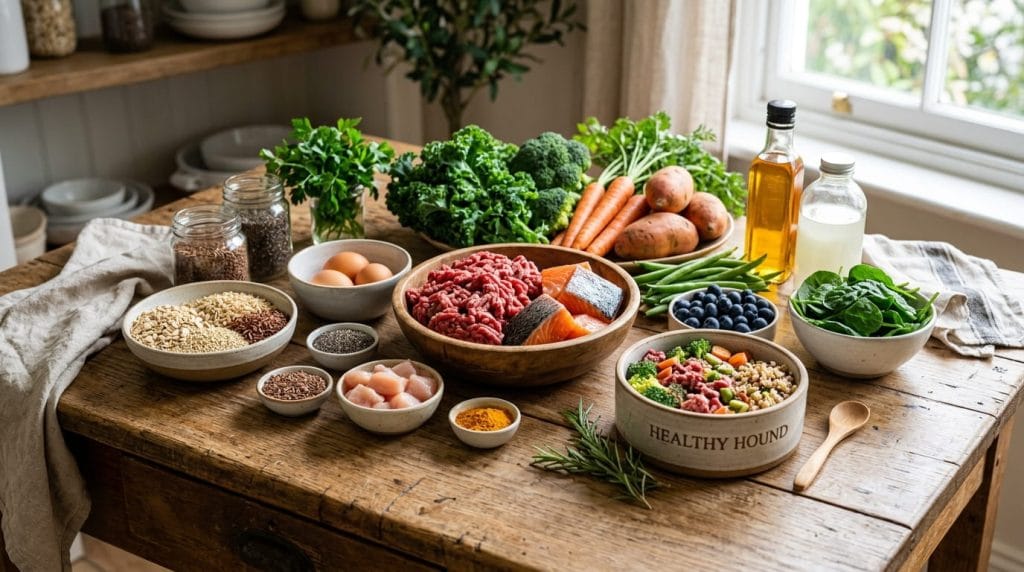
Fresh-cooked diets offer excellent digestive support. Because they use whole ingredients and gentle cooking methods, they preserve nutrients and reduce irritation. Many sensitive dogs thrive on these diets due to their simplicity.
Air-Dried or Freeze-Dried Food
These foods provide high-quality nutrition with minimal processing. They retain natural enzymes and flavor, which help digestion and reduce stomach stress.
Hydrolyzed Protein Diets
For dogs with severe allergies or chronic digestive problems, hydrolyzed protein diets may be the best foods for sensitive stomach dogs. These formulas break proteins into tiny fragments, preventing the immune system from reacting.
Ingredients to Avoid for Sensitive Stomachs
Just as some ingredients help digestion, others cause trouble. Avoiding irritants is essential when choosing the best foods for sensitive stomach dogs.
Steer clear of:
- Artificial additives
- Rendered by-products
- Cheap fillers
- High-fat formulas
- Unnecessary food dyes
- Unidentified meat sources
These ingredients often trigger inflammation, allergies, or digestive imbalance.
How to Switch to the Best Foods for Sensitive Stomach Dogs Safely
Even the perfect food can cause stomach upset if introduced incorrectly. Because digestive systems need time to adapt, transitioning slowly is essential.
Follow this schedule:
- Days 1–2: 75% old food, 25% new food
- Days 3–4: 50% old food, 50% new food
- Days 5–6: 25% old food, 75% new food
- Day 7: 100% new food
During the transition, watch for signs of discomfort such as loose stools or decreased appetite. If symptoms appear, slow down the transition process.
Adding Gut-Supporting Extras to Your Dog’s Diet
In addition to choosing the best foods for sensitive stomach dogs, you can strengthen digestion with simple supplements or natural boosters.
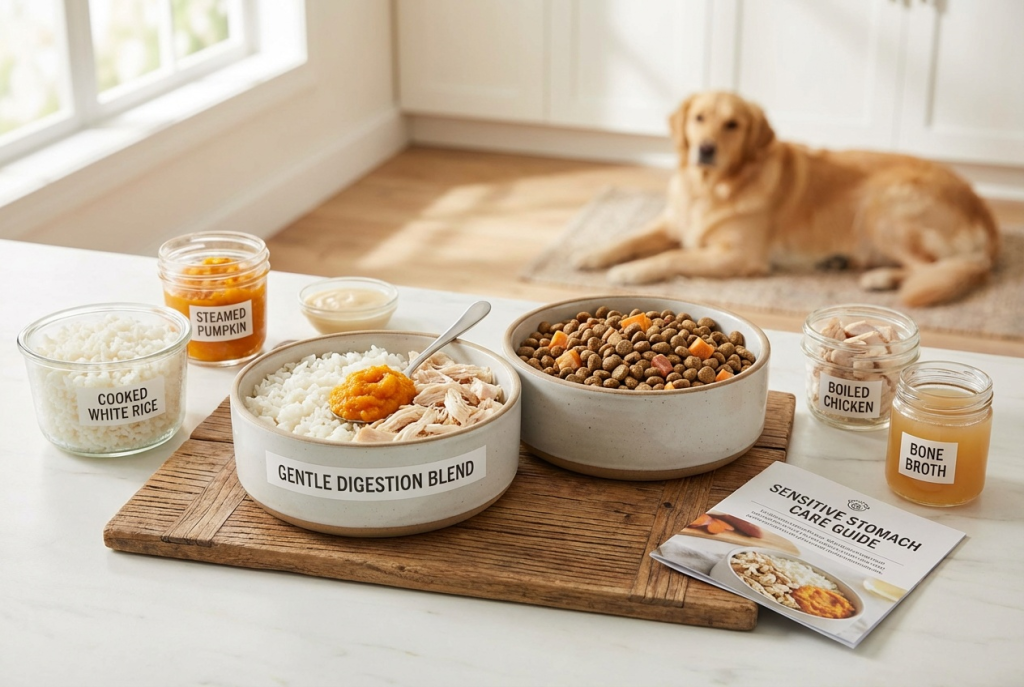
Pumpkin
Pumpkin adds gentle fiber that supports stool consistency. It also helps soothe inflammation in the gut.
Bone Broth
Bone broth hydrates, nourishes, and provides minerals that help restore gut balance. Dogs with low appetite often find it irresistible.
Probiotic Supplements
Additional probiotics help balance gut bacteria, especially after antibiotics or illness.
Digestive Enzymes
Dogs with sluggish digestion benefit from enzymes that assist in breaking down fats, proteins, and carbohydrates.
Goat Milk
Raw or powdered goat milk contains probiotics and enzymes that support immune function and digestion.
Feeding Tips for Dogs with Sensitive Stomachs
Daily habits matter just as much as food quality. With the right routines, your dog experiences fewer flare-ups and smoother digestion overall.
Feed Smaller, More Frequent Meals
Large meals overwhelm the stomach. Split daily food into two or three smaller meals for easier digestion.
Avoid Table Scraps
Human foods often contain fat, spices, or ingredients that disrupt canine digestion.
Keep Treats Simple
Choose single-ingredient treats such as:
- Freeze-dried chicken
- Sweet potato chews
- Salmon bites
Avoid complicated ingredient lists.
Know Your Dog’s Triggers
Some dogs react strongly to chicken, beef, dairy, or grains. Tracking symptoms helps you identify and avoid specific triggers.
Maintain Hydration
Water supports every digestive process. Ensure fresh water is always available, especially if your dog eats dry kibble.
When Sensitive Stomach Food Isn’t Enough
Sometimes diet alone doesn’t solve digestive issues. If symptoms persist, a veterinarian can help identify underlying problems such as:
- IBS or IBD
- Pancreatitis
- Parasites
- Food allergies
- Liver or kidney issues
- Gut infections
Early evaluation ensures your dog receives the right care before symptoms escalate.
Conclusion
Finding the best foods for sensitive stomach dogs is one of the most meaningful ways you can support your dog’s health. When you choose high-quality ingredients, simple formulas, and gut-friendly nutrients, you give your dog the comfort and stability they deserve. With consistent habits, patience, and the right diet, your dog can enjoy calmer digestion, better energy, and a happier life.
FAQ
1. What is the best food for a dog with a sensitive stomach?
The best food depends on your dog’s triggers, but limited-ingredient diets with simple proteins and gentle carbohydrates usually help most.
2. How can I tell if my dog needs sensitive stomach food?
Frequent vomiting, diarrhea, gas, or appetite changes indicate the need for gentler formulas.
3. Are grain-free diets better for sensitive stomachs?
Not always. Some dogs digest rice or oatmeal better than grain-free alternatives.
4. How long does it take to see improvement after switching food?
Most dogs improve within one to two weeks, though some take longer depending on the condition.
5. Can treats cause stomach sensitivity?
Yes. Treats with artificial additives or multiple ingredients can trigger flare-ups, so choose simple options.