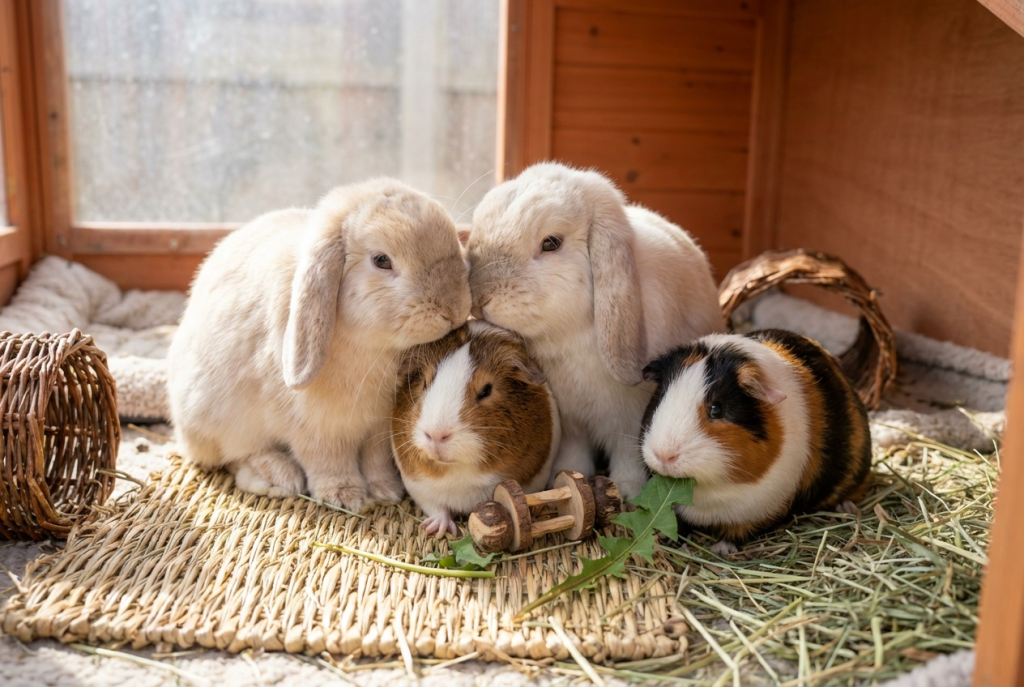

Learning how to bond rabbits or guinea pigs without fights is one of the most rewarding experiences in small-pet care. Yet it can also feel intimidating. These animals form deep social bonds, but they also protect their space, routines, and comfort zones. When two individuals meet for the first time, instincts take over. Sometimes those instincts lead to curiosity and closeness. Other times, they lead to lunging, chasing, kicking, or loud vocal warnings. Because of this unpredictability, many owners worry that bonding will end in conflict.
Fortunately, you can bond rabbits or guinea pigs smoothly when you understand how they communicate. These species rely heavily on subtle signals, scent, and social structure. When the bonding process follows their natural instincts, they relax. When it moves too quickly or happens in the wrong setting, they become defensive. The key is to create calm introductions, predictable routines, and safe environments that encourage acceptance rather than survival behaviors.
Bonding takes time, but it doesn’t have to be dramatic. With the right steps, you can help both animals feel secure enough to trust one another. As trust grows, companionship naturally follows. Before long, two anxious strangers become a synchronized, confident pair.
Why Bonding Rabbits or Guinea Pigs Matters
Rabbits and guinea pigs are social animals. They thrive when they have companionship, communication, and shared interaction. Even though each species expresses social behavior differently, the emotional benefits are remarkably similar.
Social partnerships help:
• Reduce stress
• Increase confidence
• Encourage play
• Support emotional wellbeing
• Strengthen daily routines
• Improve digestion and appetite
However, these benefits only appear when the bond is healthy. Forced or rushed introductions may backfire. Because of this, regular preparation is essential when you want to bond rabbits or guinea pigs successfully.
When a bond forms naturally, the pair becomes more relaxed, affectionate, and stable. They mirror one another, share resources peacefully, and develop mutual grooming habits. This transformation is one of the greatest rewards of careful bonding.
Understanding Species Differences Before You Bond Rabbits or Guinea Pigs
Although many bonding principles overlap, rabbits and guinea pigs behave differently during introductions. Understanding these differences helps prevent misunderstandings.
Rabbits
Rabbits rely on hierarchy and body language. When they meet, they may mount, chin-mark, circle, or thump to establish dominance. These actions are normal as long as they remain controlled and don’t escalate.
Guinea Pigs
Guinea pigs use vocal communication extensively. Rumbling, teeth chattering, purring, squeaking, and whining express their emotions. They also perform rumble-strutting, a dominance action that is usually harmless.
Recognizing normal dominance behaviors helps you stay calm and intervene only when necessary. Most animals work things out when given structure and space.
Preparing to Bond Rabbits or Guinea Pigs Without Conflicts
Preparation shapes the entire bonding experience. When you take the time to organize the environment and meet basic needs, both animals feel safer.
Health Checks First
Healthy animals bond better. Illness, pain, or discomfort increases irritability and defensive behavior. Before introductions, ensure both animals:
• Have no injuries
• Eat normally
• Show stable weight
• Shed and move normally
• Display no digestive issues
Healthy partners are more confident and less reactive.
Neutral Territory Is Essential
Never introduce animals in a space that belongs to either one. When you bond rabbits or guinea pigs, territorial behavior is one of the biggest triggers for conflict. Use an area neither animal has used before.
Good neutral spaces include:
• An unused hallway
• A clean bathroom
• A playpen set up in a new location
• A friend’s room
• A neutral outdoor enclosure (supervised only)
Neutral territory prevents one animal from becoming defensive over resources, scents, or resting areas.
Pre-Scent Swapping Helps Reduce Anxiety
Before animals meet physically, allow them to experience each other’s scent. This reduces the shock of first contact and encourages familiarity.
Swap:
• Bedding
• Toys
• Hideouts
• Blankets
• Litter (for rabbits only)
Short scent exposure sessions build recognition, making bonding easier.
First Meetings: The Safest Way to Bond Rabbits or Guinea Pigs
The first introduction shapes every interaction that follows. When you approach this moment gently, both animals feel safer.
Keep Sessions Short at First
Initial bonding sessions should last only a few minutes. Short sessions reduce stress and prevent escalation. If both animals seem relaxed, gradually increase session length over time.
Stay Nearby but Avoid Hovering
Supervision is essential for safety, but hovering too close may increase tension. Sit near the bonding area with calm body language. Watch closely, but allow the animals space to communicate naturally.
Encourage Calm Behavior with Distractions
Distractions help bond rabbits or guinea pigs by redirecting nervous energy. Offer:
• Small piles of hay
• A few greens
• Tunnels or cardboard boxes
• A sprinkle of pellets
Shared activities encourage cooperation instead of confrontation.
Normal Dominance vs. Aggression: How to Tell the Difference
Bonding always includes some level of hierarchy establishment. It’s important to recognize harmless dominance versus true aggression.
Normal Dominance Behaviors
These include:
• Mounting
• Chasing without biting
• Rumble-strutting (guinea pigs)
• Mild circling
• Head lowering
• Light nose nudging
• Low-level teeth chattering
These behaviors create social structure. They are not harmful as long as both animals remain calm and no injuries occur.
Aggressive Behaviors That Require Intervention
Aggression includes:
• Lunging with intent
• Biting that breaks skin
• Rolling fights
• Repeated kicking
• Chasing with panic
• Screaming (guinea pigs)
• Ear or face biting (rabbits)
If you see these signs, separate the animals immediately and try again later in shorter, calmer sessions.
Techniques That Help Bond Rabbits or Guinea Pigs Smoothly
Different bonding strategies work for different pairs. When you combine these techniques, you create a controlled introduction that minimizes stress.
Parallel Living Arrangements
Place animals in side-by-side enclosures so they can see and smell each other without physical contact. This builds familiarity while eliminating confrontation.
Switch enclosures daily to mix scents and reduce territorial attachment.
Stress-Free “Stabilization” Activities
Gentle stress (not fear) can promote bonding by encouraging animals to rely on each other for comfort. Activities include:
• Riding in the same carrier during a short familiar drive
• Sitting together in a small pen on your lap
• Being held side by side on a table with treats nearby
These activities signal companionship, not conflict.
Walking Together in Neutral Zones
Allow rabbits or guinea pigs to explore a neutral space freely while you supervise quietly. Movement reduces tension and encourages curiosity instead of confrontation.
Using Positive Reinforcement
Offer treats and affection after calm interactions. This teaches both animals that peaceful behavior results in positive outcomes. Rabbits respond especially well to treat rewards, while guinea pigs enjoy fresh vegetables and soft verbal encouragement.
Extending Bonding Sessions Safely
As the animals relax, you can expand the length and complexity of bonding sessions.
Increase Session Duration Gradually
Longer sessions encourage familiarity. However, always end the session on a positive note. Stopping too late may lead to a sudden conflict.
Add Enrichment Items Slowly
Introducing too many objects at once may trigger resource guarding. Instead, add one item at a time. Observe how each animal responds.
Watch for Displacement Stress
Sometimes animals redirect stress into:
• Excessive grooming
• Repetitive movement
• Nervous nibbling
• Freezing
These actions signal that you should shorten the session or simplify the environment.
How to Bond Rabbits or Guinea Pigs Permanently and Safely
Permanent bonding requires patience. Although some pairs bond in days, others take weeks.
Moving to a Shared Space
Once animals tolerate long bonding sessions without tension, you can transition them into a shared space. Clean the enclosure thoroughly to remove familiar scents. Replace bedding and arrange items symmetrically to prevent territorial behavior.
Provide Multiple Resources
Multiple access points help prevent competition. Offer:
• Two hideouts
• Two hay piles
• Two water bottles
• Two food bowls
Even bonded pairs appreciate the option to choose their own space.
Monitor the First 48 Hours Closely
The first two days in a shared enclosure are the most unpredictable. Sleep nearby if possible. Listen for vocalizations and check for signs of escalation. Most pairs stabilize after the initial adjustment period.
Long-Term Maintenance After You Bond Rabbits or Guinea Pigs
Bonding doesn’t end once the animals share a space. Maintenance helps keep the bond strong.
Keep a Predictable Routine
Consistent feeding times, cleaning schedules, and bonding activities create stability. Stable environments reduce stress and prevent fights.
Watch for Subtle Resentment Behaviors
Signs include:
• Blocking access to food
• Nudging away from hideouts
• Persistent chasing
• Out-of-character vocalizations
• Tense posture
If tension rises, increase enrichment or provide more space. Early intervention keeps the bond healthy.
Offer Group Enrichment Daily
Bonded animals thrive when they play, explore, or relax together. Provide:
• Tunnels
• Chew toys
• Paper bags
• Fresh vegetation
• Floor time in new rooms
Enrichment improves confidence and lowers frustration.
When Bonding Doesn’t Work
Occasionally, two animals simply aren’t compatible. Even with perfect preparation, personalities clash. Some rabbits and guinea pigs prefer to live alone while still enjoying companionship through side-by-side enclosures.
If multiple bonding attempts fail, it’s okay. Respecting their boundaries keeps both animals safe and emotionally stable.
Conclusion
Learning how to bond rabbits or guinea pigs without fights takes time, patience, and careful observation. When you introduce them gradually, create neutral bonding spaces, and reinforce calm behavior, you help them build trust at their own pace. A successful bond forms when both animals feel secure, respected, and free from pressure. As their confidence grows, their companionship becomes stronger. With the right approach, even hesitant animals can develop warm, lasting relationships that enrich their lives.
FAQ
1. How long does it take to bond rabbits or guinea pigs?
Some pairs bond in a few days, while others may take weeks or even months.
2. Is mounting normal during bonding?
Yes. Mounting helps establish hierarchy and is normal unless it becomes aggressive.
3. What should I do if a fight breaks out?
Separate the animals immediately, calm them, and try again later with shorter sessions.
4. Can rabbits and guinea pigs live together?
No. They should not be paired. Bond only same-species partners.
5. Should I separate bonded animals if they argue?
Minor disagreements are normal, but separate them if aggression escalates or injuries occur.