Keeping your hamster or guinea pig entertained is about more than just fun—it’s essential for their well-being. Enrichment toys for hamsters and guinea pigs help prevent boredom, encourage exercise, and satisfy their natural instincts to explore, chew, and burrow. Without proper stimulation, these small pets can become anxious or even depressed. Let’s explore the best ways to bring joy, challenge, and variety into their tiny worlds.
Why Enrichment Toys Matter for Small Pets
Think of enrichment toys as your pet’s version of a playground, gym, and puzzle combined. Hamsters and guinea pigs are naturally curious and active animals. In the wild, they spend hours digging, running, foraging, and interacting with their environment. In captivity, they rely on us to recreate that stimulating world.
Enrichment toys for hamsters and guinea pigs keep their minds sharp and bodies healthy. They reduce stress, prevent obesity, and curb destructive behavior like bar chewing or fur pulling. These toys also build confidence as pets learn to explore, solve simple challenges, and use their senses.
When your pet’s environment changes often—with tunnels, chew toys, or puzzle feeders—they stay engaged and happier overall. It’s not just play; it’s their way of living a full life.
Understanding Your Pet’s Play Behavior
Before diving into specific toys, it helps to understand how hamsters and guinea pigs differ in their play habits. Hamsters are solitary and nocturnal. They love running, climbing, and chewing. Guinea pigs, on the other hand, are social and thrive on group play, exploring tunnels, and interactive games.
Hamsters prefer toys that mimic burrows or challenge their agility, while guinea pigs enjoy toys that encourage movement, chewing, and social interaction. Observing how your pet behaves—whether they hide, climb, or chew more—will help you choose the right mix of toys.
Best Enrichment Toys for Hamsters
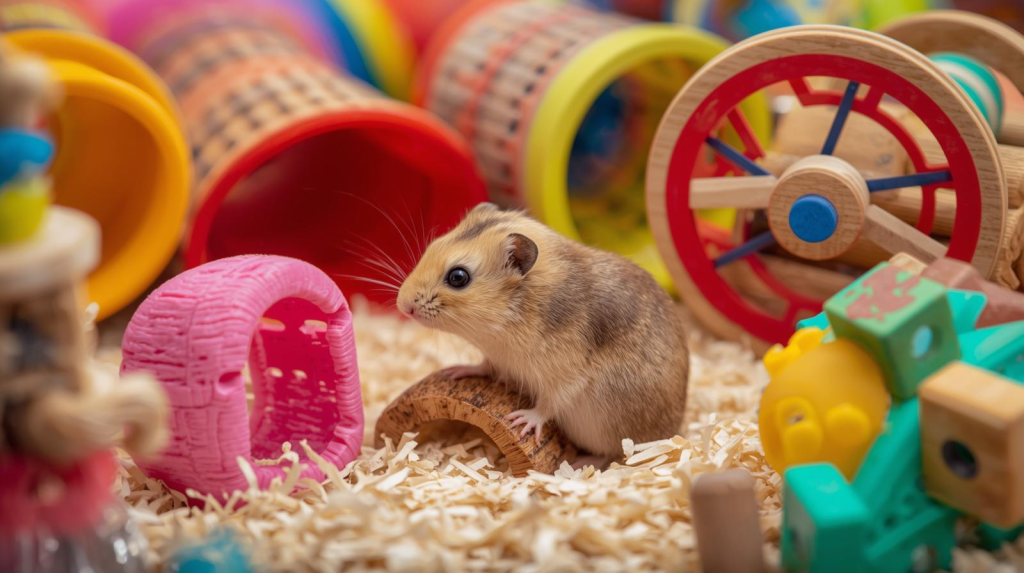
Hamsters are energetic and love to stay busy. They need a variety of toys that let them run, explore, and chew safely.
Exercise Wheels and Balls
Every hamster needs an exercise wheel. It’s their built-in treadmill. Choose a solid-surface wheel with no rungs to avoid injury. The right size matters—a wheel too small can hurt their back. For most species, an 8–12-inch wheel works best.
Exercise balls are another option for short supervised sessions. They let your hamster roam safely outside the cage, but always keep sessions under 20 minutes to prevent overheating.
Chew Toys and Gnawing Blocks
Hamsters’ teeth grow constantly, so chew toys are a must. Wooden gnawing blocks, natural branches (like apple wood), and mineral stones help keep their teeth trimmed. Avoid plastic or painted toys, as they can be toxic.
Rotate different textures—wood, cardboard, and hay-based toys—to keep things interesting. This variety mimics natural foraging behavior and reduces boredom.
Hideouts and Foraging Toys
Hamsters love having secret spots. Small hideouts or tunnels give them security while feeding their curiosity. Foraging toys, such as treat balls or small hay-stuffed tubes, encourage natural food-searching behavior.
You can also scatter food throughout their enclosure or use a sand bath area for digging fun. These small challenges turn mealtime into an adventure.
Best Enrichment Toys for Guinea Pigs
Guinea pigs thrive on companionship and playful exploration. They need space, interaction, and safe chewable materials to stay engaged.
Tunnels and Hideouts
Tunnels are at the heart of guinea pig enrichment. They mimic the burrows and paths guinea pigs would explore in nature. Choose collapsible fabric tunnels or natural hay tunnels. Hideouts—like igloos or small huts—offer cozy places to rest and feel safe.
Adding multiple tunnels or rearranging them weekly gives your guinea pig new paths to explore, preventing boredom.
Chew Toys and Play Balls
Like hamsters, guinea pigs also need chew toys to manage dental growth. Wooden blocks, willow balls, and untreated apple branches work perfectly. Avoid anything with glue or paint.
Some guinea pigs also enjoy lightweight play balls they can nudge with their noses. Watching them push and chase these balls is both adorable and mentally stimulating.
Puzzle Feeders and Treat Mazes
Puzzle toys challenge your guinea pig’s brain. Simple treat mazes, hay rollers, or veggie kabobs encourage problem-solving and slow down eating. This not only entertains them but also improves digestion.
You can make feeding time more engaging by hiding vegetables in cardboard boxes or paper tubes. The goal is to spark curiosity and keep them active.
DIY Enrichment Ideas You Can Make at Home
You don’t need to spend a fortune to make your small pet happy. Many DIY enrichment toys for hamsters and guinea pigs can be made with items you already have.
Use toilet paper rolls, cardboard boxes, and paper bags to create tunnels or hideouts. Stuff them with hay or small treats for added fun. Try making a treat puzzle by folding paper into little pockets with food inside.
A hanging vegetable skewer or a homemade cardboard maze adds endless entertainment. Just remember to avoid tape, staples, or any materials they might ingest.
Rearranging cage accessories weekly also adds novelty—what feels like a small change to you can feel like a whole new world to your pet.
Tips for Safe and Effective Playtime
Safety always comes first when introducing new toys. Follow these simple guidelines to keep playtime fun and risk-free:
- Choose toys made of non-toxic, natural materials.
- Avoid small parts or strings that could cause choking.
- Clean toys regularly to prevent bacteria buildup.
- Rotate toys every few days to maintain excitement.
- Always supervise out-of-cage play sessions.
Remember, enrichment toys for hamsters and guinea pigs aren’t about quantity—they’re about quality and creativity. A few well-chosen items can turn an ordinary habitat into a lively playground.
Conclusion
When it comes to caring for small pets, playtime is just as important as feeding and cleaning. Enrichment toys for hamsters and guinea pigs help them express natural behaviors, stay active, and live fuller, happier lives. By mixing store-bought and homemade toys, you can create an ever-changing environment that challenges their minds and satisfies their instincts.
The best part? You’ll enjoy watching their personalities shine as they explore, chew, and play every day. A little effort goes a long way toward giving your furry friend a joyful, enriched life.
FAQ
1. What type of toys do hamsters enjoy most?
Hamsters love running wheels, tunnels, chew toys, and foraging puzzles that let them explore and stay active.
2. Can guinea pigs use hamster toys?
Not all hamster toys are safe for guinea pigs. Choose larger, sturdier toys without small gaps or parts that can trap their feet.
3. How often should I change my pet’s toys?
Switch toys weekly or every two weeks. Regular rotation keeps your hamster or guinea pig engaged and prevents boredom.
4. Are cardboard toys safe for small pets?
Yes, plain cardboard is safe as long as it’s free of tape, glue, or ink. It’s great for chewing and creating tunnels.
5. Can I make enrichment toys myself?
Absolutely! DIY enrichment toys made from cardboard, paper rolls, and hay are budget-friendly and fun for your pets.